
Uncategorized
Rechargeable vs Non-Rechargeable Disposables: What’s the Real Difference?
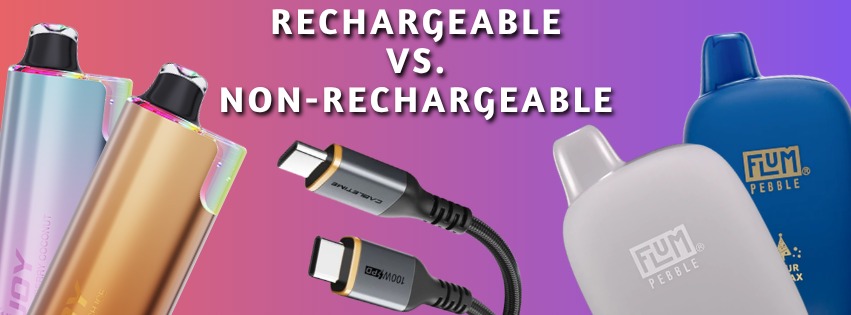
Looking for rechargeable vs non disposables? VapeLite keeps it in stock with fast US shipping and 21+ verification on every order. Rechargeable vs Non-Rechargeable Disposables: What’s the Real Difference? have evolved far beyond their original purpose, and one of the biggest shifts in recent years is how they handle power. What used to be a simple, single-use battery system has now split into two distinct approaches: rechargeable disposables and high-capacity non-rechargeable devices.
On one side, there are rechargeable models like the Flum Pebble X, designed to be used until every drop of e-liquid is gone. On the other, there are devices like the iJoy IO50K, built with oversized batteries that eliminate the need for charging altogether.
At first glance, both seem to solve the same problem—lasting longer. But how they get there creates two very different experiences.
How Rechargeable Disposables Work
 ing {“level”:3} –>
Designed to Last Until the Last Drop
this VapeLite listing disposables focus on efficiency rather than brute force. Devices like the Pebble X typically include a smaller internal battery, often around 600mAh, paired with USB-C charging.
Instead of trying to power the entire device on a single charge, the idea is simple: recharge as needed so the battery keeps up with the e-liquid supply.
This approach solves a common issue found in older disposables, where the battery would die before the juice was fully used. With rechargeable models, that mismatch is essentially eliminated.
Consistent Power and Performance
One of the biggest advantages of rechargeable devices is stability. Because the battery can be topped off regularly, the device tends to maintain consistent output throughout its lifespan.
That means fewer weak hits toward the end and a more reliable flavor experience overall. Vapor production stays steady, and the device performs closer to how it did when it was first opened.
For users who care about consistency, this is a major benefit.
A More Sustainable Option
While still technically disposable, rechargeable devices reduce battery waste significantly. Instead of discarding a fully drained battery after one cycle, users extend its life by recharging it multiple times.
This doesn’t make them environmentally perfect, but it does make them a more responsible option compared to traditional single-use designs.
How Non-Rechargeable High-Capacity Devices Work
Built for Maximum Convenience
Non-rechargeable devices take the opposite approach. Instead of relying on recharging, they are built with large, high-capacity batteries designed to last from start to finish.
The iJoy IO50K is a perfect example, featuring a massive 2500mAh battery. That kind of capacity allows the device to power through its entire e-liquid supply without ever needing to be plugged in.
The appeal here is obvious—no cables, no waiting, no interruptions.
True Grab-and-Go Simplicity
For many users, convenience is everything. Non-rechargeable disposables deliver exactly that.
There is no need to think about battery levels beyond knowing when the device is nearing the end of its life. There is no risk of forgetting to charge it before leaving the house. It simply works until it doesn’t.
This makes it especially appealing for travel, busy schedules, or anyone who prefers a completely hands-off experience.
The Trade-Off: Performance Over Time
While the large battery helps maintain performance longer than older disposables, it is still a finite power source. As the battery drains, output can gradually decline.
That means the experience toward the end may not feel as strong or consistent as it did at the beginning. It’s not always a dramatic drop, but it is noticeable compared to rechargeable systems that can maintain peak performance with regular charging.
Comparing the Two Approaches
Convenience vs Control
The biggest difference comes down to how much involvement the user wants.
Non-rechargeable devices like the iJoy IO50K are as simple as it gets. Open the package, use the device, and dispose of it when finished. There is nothing else to manage.
Rechargeable devices like the Pebble X require a bit more attention. Charging becomes part of the routine, but in return, users get more control over performance.
Performance Consistency
Rechargeable disposables generally win in this category. Being able to recharge the battery means the device can maintain consistent output over time.
Non-rechargeable models rely entirely on their initial battery capacity. While that capacity is often large, it cannot be refreshed, which can lead to slight performance dips as the battery drains.
Environmental Impact
Neither option is completely waste-free, but rechargeable devices have the edge.
By extending the life of the battery through multiple charges, they reduce the number of batteries being discarded. Non-rechargeable devices, even with larger batteries, still contribute more waste since they are used only once.
Long-Term Value
Rechargeable devices often provide better overall value, especially for frequent users. Being able to use every bit of e-liquid without worrying about battery failure means less wasted product.
Non-rechargeable devices offer value in a different way—time and convenience. For users who prioritize simplicity over efficiency, that trade-off can be worth it.
Which One Makes More Sense?
Choosing between rechargeable and non-rechargeable disposables ultimately comes down to personal preference.
For those who want a device that requires zero maintenance and delivers a straightforward experience, something like the iJoy IO50K is hard to beat.
For users who care more about consistent performance, better efficiency, and slightly lower environmental impact, the Pebble X and similar rechargeable models offer a more refined approach.
Our Thoughts…
The shift toward high-capacity disposables has created two clear paths in the market. One focuses on simplicity and convenience, while the other leans into performance and longevity.
Neither approach is objectively better—it just depends on what matters more in daily use.
Some users will always prefer the ease of a device that never needs charging. Others will appreciate the reliability and control that comes with a rechargeable system.
Either way, the fact that both options exist shows how far disposable vape technology has come—and how much it continues to adapt to different user preferences.
Everything You Need to Know About rechargeable vs
Rechargeable Vs is one of the most searched items in our catalog. This section covers the specs, the options, and what makes it a solid buy for vapers in the United States.
Is rechargeable vs Worth It in 2026?
Short answer: yes, for most buyers. Below we compare real-world performance, price per use and availability so you can decide in under a minute.
this product: Specs, Pricing and Availability
We list the manufacturer specs side by side with what VapeLite actually stocks, including current pricing, remaining stock and typical dispatch times.
Everything You Need to Know About this product
this product is one of the most searched items in our catalog. This section covers the specs, the options, and what makes it a solid buy for vapers in the United States.
Is this product Worth It in 2026?
Short answer: yes, for most buyers. Below we compare real-world performance, price per use and availability so you can decide in under a minute.
this product: Specs, Pricing and Availability
We list the manufacturer specs side by side with what VapeLite actually stocks, including current pricing, remaining stock and typical dispatch times.
Overview: rechargeable vs non disposables
Here is the overview view of rechargeable vs non disposables, checked against the manufacturer’s spec sheet and VapeLite’s current stock levels, so you know exactly what you are buying.
In Detail: rechargeable vs non disposables
Here is the in detail view of this vs non disposables, checked against the manufacturer’s spec sheet and VapeLite’s current stock levels, so you know exactly what you are buying.
What to Expect: this vs non disposables
Here is the what to expect view of this vs non disposables, checked against the manufacturer’s spec sheet and VapeLite’s current stock levels, so you know exactly what you are buying.
Quick Facts: this vs non disposables
Here is the quick facts view of this vs non disposables, checked against the manufacturer’s spec sheet and VapeLite’s current stock levels, so you know exactly what you are buying.
Buying Guide: this vs non disposables
Here is the buying guide view of this vs non disposables, checked against the manufacturer’s spec sheet and VapeLite’s current stock levels, so you know exactly what you are buying.
Price and Availability: this vs non disposables
Here is the price and availability view of this vs non disposables, checked against the manufacturer’s spec sheet and VapeLite’s current stock levels, so you know exactly what you are buying.
Quality Checks: this vs non disposables
Here is the quality checks view of this vs non disposables, checked against the manufacturer’s spec sheet and VapeLite’s current stock levels, so you know exactly what you are buying.
Common Questions: this vs non disposables
Here is the common questions view of this vs non disposables, checked against the manufacturer’s spec sheet and VapeLite’s current stock levels, so you know exactly what you are buying.
What to Expect: rechargeable vs non disposables
Here is the what to expect view of rechargeable vs non disposables, checked against the manufacturer’s spec sheet and VapeLite’s current stock levels, so you know exactly what you are buying.
